Writing
Where Designers Go From Here
Reflections on the changing role of product/design in an age of AI.

What happens when the barriers that once constrained a profession are suddenly released? Like a dam collapsing under pressure, the sheer force of the change hits like a tidal wave.
That's a bit what it feels like to be a product/design leader right now — discovering new capabilities, while also trying not to drown amidst the turmoil.
The Skeptical Designer
Designers as a whole have been slower to adopt AI than our counterparts in product or engineering. Since the release of ChatGPT, I‘ve been part of this cohort — experimenting and learning, but not necessarily buying into the hype.
I think part of the reason designers have been slower to adopt AI is that one of the most visible use cases - creating prototypes - was something we could do already. If you’re a product manager, tools like Lovable offered something genuinely new and exciting. You got to go from writing requirement documents to creating prototypes and proofs of concept. And for many developers, the tools matured for them earlier with a smoother on-ramp through things like Cursor’s coding autocomplete.
But for designers, it was a different (though not necessarily better or quicker) way of doing the same thing we always did.
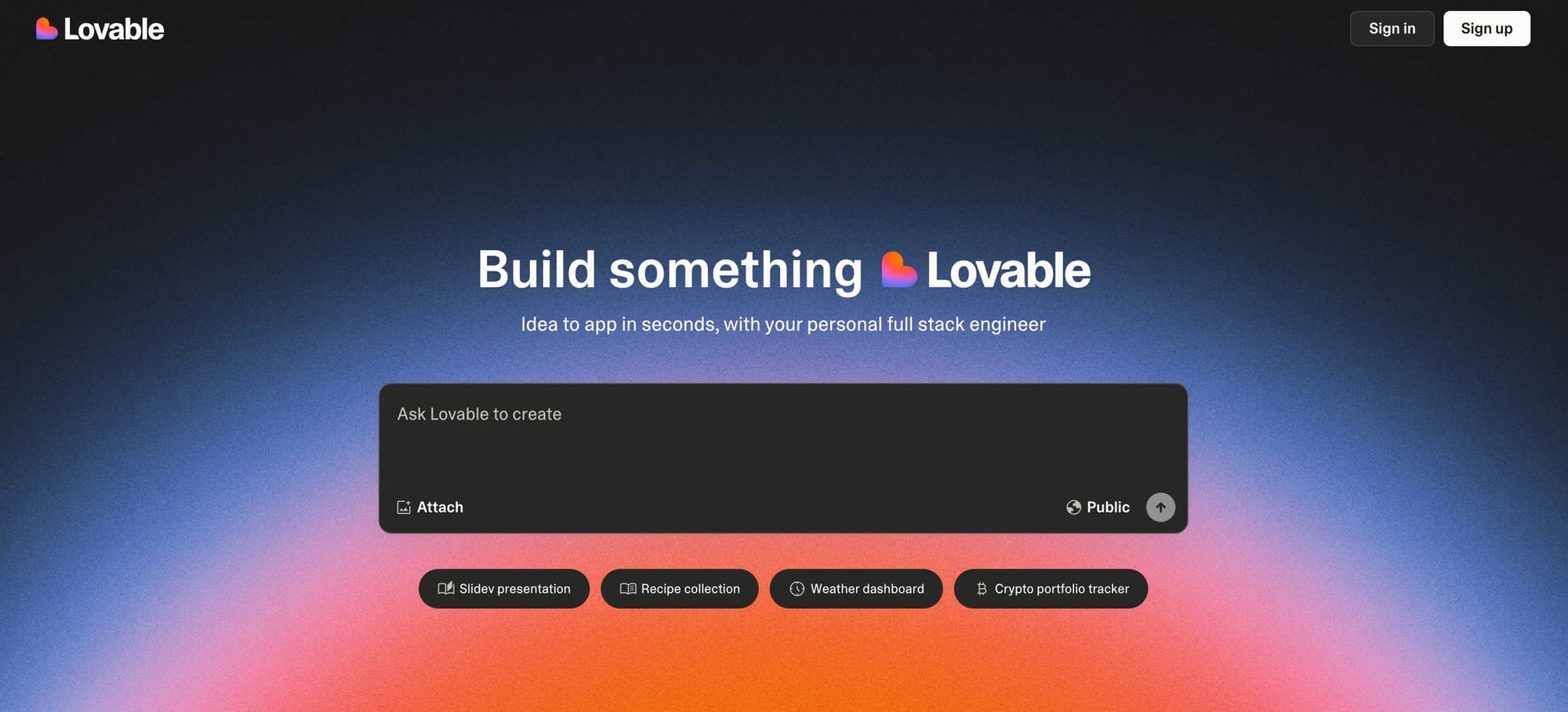
So when designers first tried out AI-generated prototyping, it was easy to see the limitations. Our experience has given us a high bar for what good looks like. We’re hyper-attuned to issues of hierarchy, spacing, and typography. And this isn't just about style or surface-level aesthetics either — the flaws designers see can be real stumbling blocks that undermine user trust, or make it harder for people to achieve their goals.
For designers, the benefit of a vibe coded prototype has been smaller, and far less transformational. The initial wave of chat-based prototype builders seemed to create proofs of concept that felt more like a children's toy than an expertly crafted tool.
But that's starting to change. And all of a sudden, things are starting to get more interesting for designers, too.
What Changed For Me?
Well, for context, I should mention that I’m a millennial. I grew up with dial-up internet, made my first website in Microsoft Publisher, got a Facebook account when it was limited to university campuses, and graduated into the mobile/social landscape. And as a millennial, I think I'm starting to appreciate what it must have felt like to have bought land in the 80s.
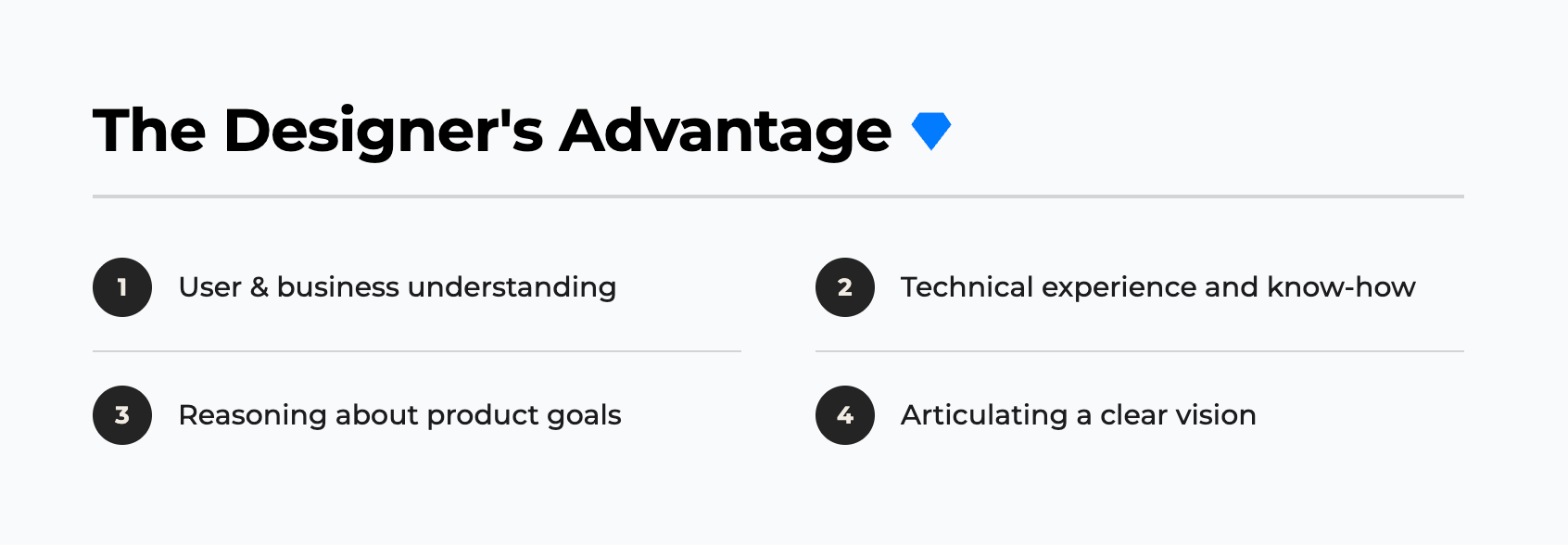
Because as it turns out, the skills I've been developing throughout my career are exactly the skills needed for AI-enabled product development. Things like deep business/customer understanding, technical know-how, being able to reason about the goals of a product, and articulating a clear vision are precisely the skills needed to get good outputs when working with AI.
Like the Boomers, I didn't land here out of any strategic brilliance. I’m just lucky enough to have been in the right place at the right time. I won big with the skills I invested in over the last decade.
And honestly? I feel as though I've been unleashed.
Every idea that would have been left on the cutting room floor is just a few hours from a surprisingly good proof of concept. And the designers I talk to who are building with these tools feel the same — the barriers have disappeared.
Professional Grade Tools
For me the biggest unlock has been moving from consumer-grade tools to development workflows. The hype with Claude Code is absolutely real. And it makes sense — coding languages have exactly the kind of structured data that large language models excel at. And as big tech pours more and more resources into the space, the workflows and techniques are beginning to mature.
And just like the folks who were unlocked by their ability to create simple prototypes with tools like Lovable, I’m discovering I can do things I wouldn’t have even considered before. I know which tools to use, what good looks like — and what I don't know, AI can help teach me.
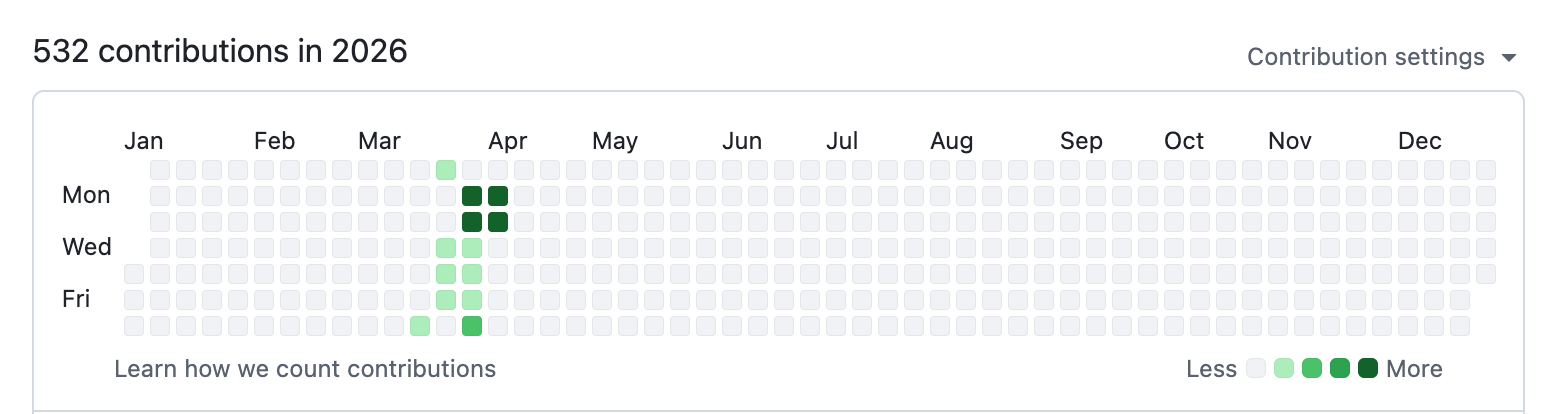
So instead of making brittle prototypes in Figma, or sprawling Miro boards that nobody reads, I‘m starting to create my own tools. I'm building interactive documentation, and experimenting with product ideas — all without tying up development resources. You only have to look at how my GitHub commits have changed in the last month to see that this has quickly become a real tool, not a toy.
The Path Ahead
The thing I tell people on the fence is this:
If you can describe it, you can build it.
You have to work to break things into bite pieces rather than one-shotting it. And you need to have a firm grasp of what's actually possible with technology, as well as the limitations of different approaches.
But as a designer, the truly fun thing here is that we get to work with the medium again. Instead of creating pictures of screens that need to be translated by others, we can design something in code and try it out for ourselves in the browser. After a decade where professionals went deep on specialization in design and technology, it's actually a return to form — whether it was GeoCities pages, MySpace CSS hacks, or Flash experiences, many of us got our start as creators and generalists. We were builders first, specialists second.
I’m only a few weeks into this transformation, but I can already tell there’s no going back. And even though I've yet to submit a pull request, I can see how that's probably on the horizon, too. And I'm ready for it.
The builder’s capabilities just got democratized. We’ve spent years debating whether designers should learn to code, but this time it’s obvious. It's time for designers to step off the sidelines, to pick up the tools and build the future.