Writing
10 Resources That Helped Me Bridge UX and Product Thinking
Resources for Designers, Engineers, and others navigating modern product work.

Over the last few years, I've been exploring the overlap between UX and Product leadership. The boundary between these two disciplines has never been thinner — yet the tension between the two is rising. In the age of AI, that pressure is only increasing. When both roles aim to shape strategy and occupy the same space, it's easy to step on each other's toes.
Although my background is in UX Design, the more I've studied Product thinking, the more I've begun to recognize it in the work I've been doing all along. If you operate at the intersection of these domains — or you want to work more effectively with your team — these resources helped me make sense of the overlap. As a whole, they surface a few recurring themes:
- UX and Product teams often share goals, but speak different languages. The tension surfaces less from individuals and more from systemic differences in incentives, training, and craft vs management roots.
- Modern product practices borrowed heavily from UX. Techniques like continuous discovery, story mapping, and iterative testing/validation were pioneered in design, long before they become product doctrine.
- Many senior designers are wrestling with a phase shift in the industry. As product development practices evolve, the ask of design teams is increasingly shifting from strategy-oriented discovery, to craft-focused delivery.
- Both disciplines feel the disconnect between what they'd like to deliver and the reality of what they can offer. Both are shaped by uncertainty, constraints, and trade-offs (though their mindset toward each differs).
- Market pressure is reshaping expectations for both roles. Pressures to adopt AI, increase profitability, and do more with less are squeezing practitioners in both UX and Product.
1. Design's Mid-Life Crisis (Andy Budd)
Andy Budd (Founder of Clearleft and author of The Growth Equation) argues that Design is experiencing a mid-life career crisis. He diagnoses the warning signs and symptoms, and discusses his observation that so many designers are feeling burnt out and disillusioned despite an industry that by all accounts is thriving and in demand (this was recorded in 2022 prior to tech layoffs).
- Designers are taught an idealized process (the double diamond) that realistically speaking, doesn't exist in most organizations.
- Designers see themselves as advocates for "the voice of the customer", which leads to frustration when business or product decisions conflict with user needs.
- Designer tendencies toward perfection come into conflict with business needs for speed and revenue — leaving design teams disappointed about the 20% that didn't ship, rather than celebrating the 80% that did.
- He suggests that the industry should look outwards, including to peers in sales and growth, rather than centring on itself. He urges designers to be more pragmatic, thinking in a series of long-term bets rather than a single win-or-lose dynamic.
2. Thinking in Bets: Making Smarter Decisions When You Don't Have All the Facts (Annie Duke)
You'll hear this sentiment in all kinds of product-centric circles — that Product is a game of poker, not a game of chess. In an uncertain environment, you don't have to win every time — instead you want to maximize wins and minimize losses with a decision-making framework that pays off over the long term.
For Annie, poker is a remarkably effective environment with a short feedback loop (20 decisions per hand x 30 hands per hour = 600 decisions per hour) for practicing decision making under uncertainty.
- Decisions made with incomplete information suffer from human tendencies to judge based on results rather than process (Annie calls this "resulting").
- Avoid black-and-white thinking by assigning confidence levels (i.e. 70% sure) to force yourself to recognize and think through uncertainty.
- Set up and use like-minded groups to challenge beliefs, reveal biases, and avoid decision making traps so you can learn together.
- Establish "kill criteria" and commit yourself in advance to taking action when those signals appear.
 Annie Duke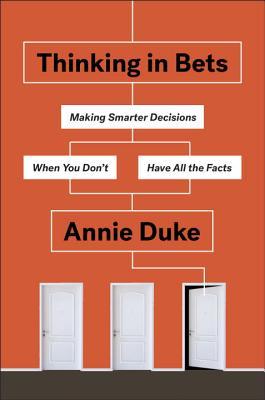
3. Changing the Conversation About Product Management vs UX (Melissa Perri)
Melissa Perri is most well known for her writing on product management. Her book, Escaping the Build Trap is required reading in nearly every product curriculum for a reason.
But few know that she's operated on both sides of the UX/Product equation. Her experience as a Lead UX Designer — "I wasn't allowed to participate in feature decisions. Those were made by the Product Managers. I was just the person who designed them" is a familiar sentiment for many.
Her blog post on changing the conversation is a must-read:
- Overlapping and sometime murky responsibilities are common in job descriptions for both Product and UX roles (research, user flows, wireframes, and customer problems are but a few items in the centre of her diagram).
- Changing the conversation to skill coverage rather than role definition helps collaborative teams assign work based on who's best suited to the task at hand, not job title.
- Product and UX need to be able to make decisions together. If they're not, you'll inevitably see a disconnect in both the team and the product.
- The skills are complementary — knowledge of UX makes Melissa a better product manager, and knowledge of product management makes her a better UX designer.
 Melissa Perri
4. Product Management for UX People (Christian Crumlish)
Christian Crumlish's book does exactly what it promises to do — demystifies the product management role for a UX audience. As a longtime host of the Design in Product community (a Slack group that looks to have been retired), and a former UXer himself, Christian helps decode how product organizations think, decide, and operate.
Although he discusses the significant overlap in roles and the possibility of UXers pivoting into Product, he remains mostly neutral on the subject (in fact, he cautions against those who would make the move just for authority alone).
The book also contains a sidebar with John Cutler's 44 Signs You Are Becoming A Real Product Manager, which some of you may see yourself in.
- Christian discusses the overlap between the two roles, then layers on the additional responsibilities of Product in understanding financial models, working with data, as well as driving growth, engagement, and retention.
- Product works closely with engineering, but the job isn't telling engineers what to do — it's providing focus, direction, and meaning with clearly articulated goals, well-scoped requests, and collaborative solutioning.
- Product's role is to make decisions despite uncertainty. As Christian memorably describes it, he doesn't get to say "it depends" anymore.
 Christian Crumlish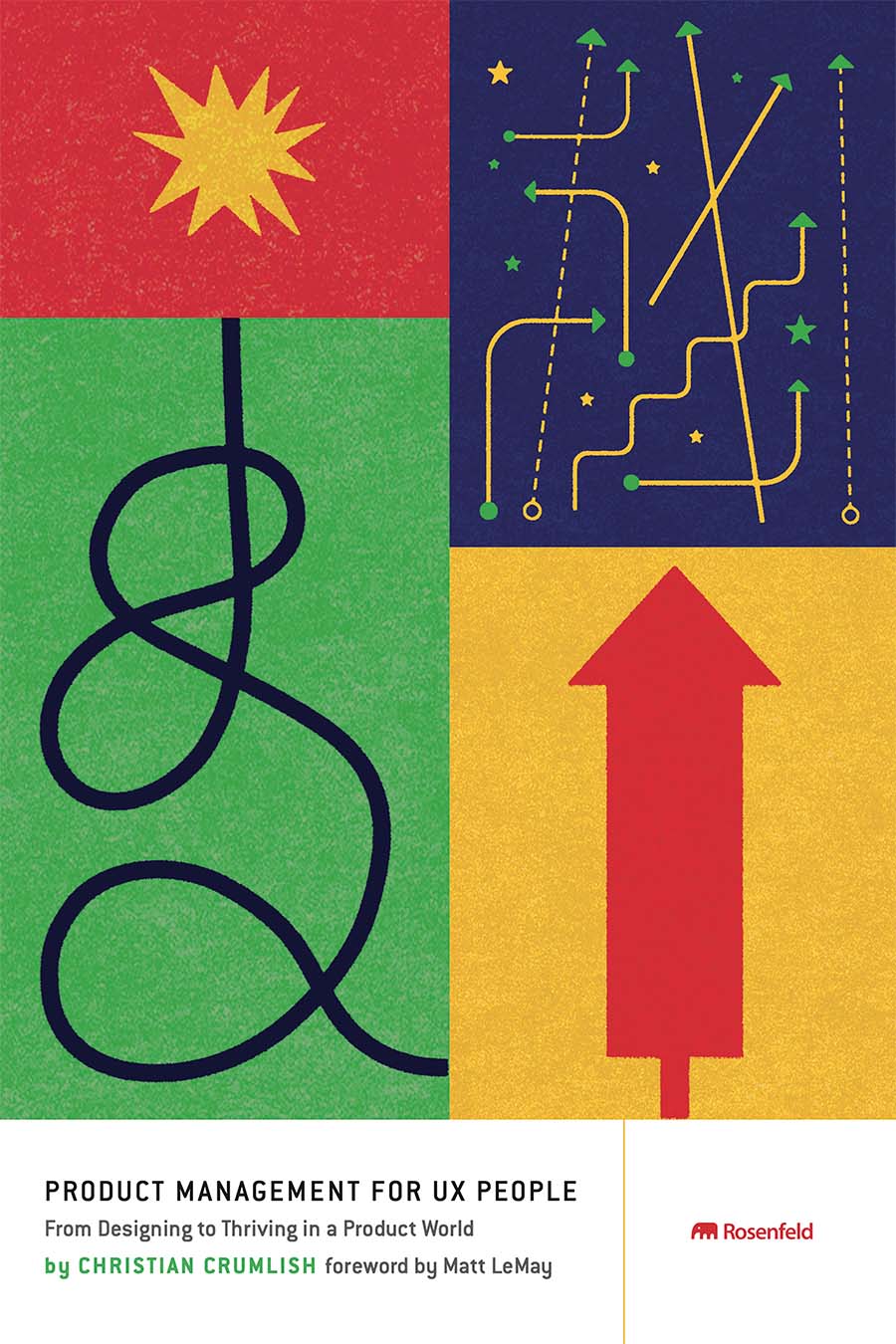
5.Moving from UX into Product Management (Ivy Hornibrook, This is HCD)
UX Designers who are considering the move into Product will want to give this podcast a listen. Ivy Hornibrook, a former UXer turned Product Manager, joins the This is HCD podcast to talk about her experience.
After spending some time in hybrid roles, she eventually joined a startup as Head of Product (currently a Product Lead with Canva based on her LinkedIn). She encourages other UXers to make the jump, identifying the overlapping skillset and highlighting the strengths that people with UX backgrounds bring to the table.
- She found that UX was increasingly relegated to the delivery phase, while her interest lay in the earlier stages of problem definition and questioning "is this worth doing?"
- After mapping UX terminology to product terminology, she came to realize that the differences in vocabulary weren't just words that could be substituted, but differences in how each discipline sees the world.
- Superpowers that UXers bring to the Product role include collaboration, creating empathy and understanding, and a sixth sense for usability.
 John Carter
6. Everyone Can Do Continuous Discovery — Even You (Teresa Torres)
Teresa Torres' work on continuous discovery has become foundational in modern product circles, but it clearly has roots in UX. Teresa outlines 11 discovery habits — from defining outcomes and experience mapping, to testing assumptions, measuring impact and showing your work.
These habits will feel familiar to UX designers, but Teresa shifts the research mindset from projects and deliverables to an ongoing habit (she recommends that teams schedule weekly conversations with customers).
- Continuous discovery reframes research as a weekly habit rather than a project-based deliverable.
- Discovery is a team activity. Teresa notes that there's nothing more effective at breaking down the divide between disciplines than product, design, and engineering spending time learning together.
- Teresa frames product thinking around opportunity solution trees, a structured technique for mapping opportunities, testing assumptions, and evaluating solutions.
 Teresa Torres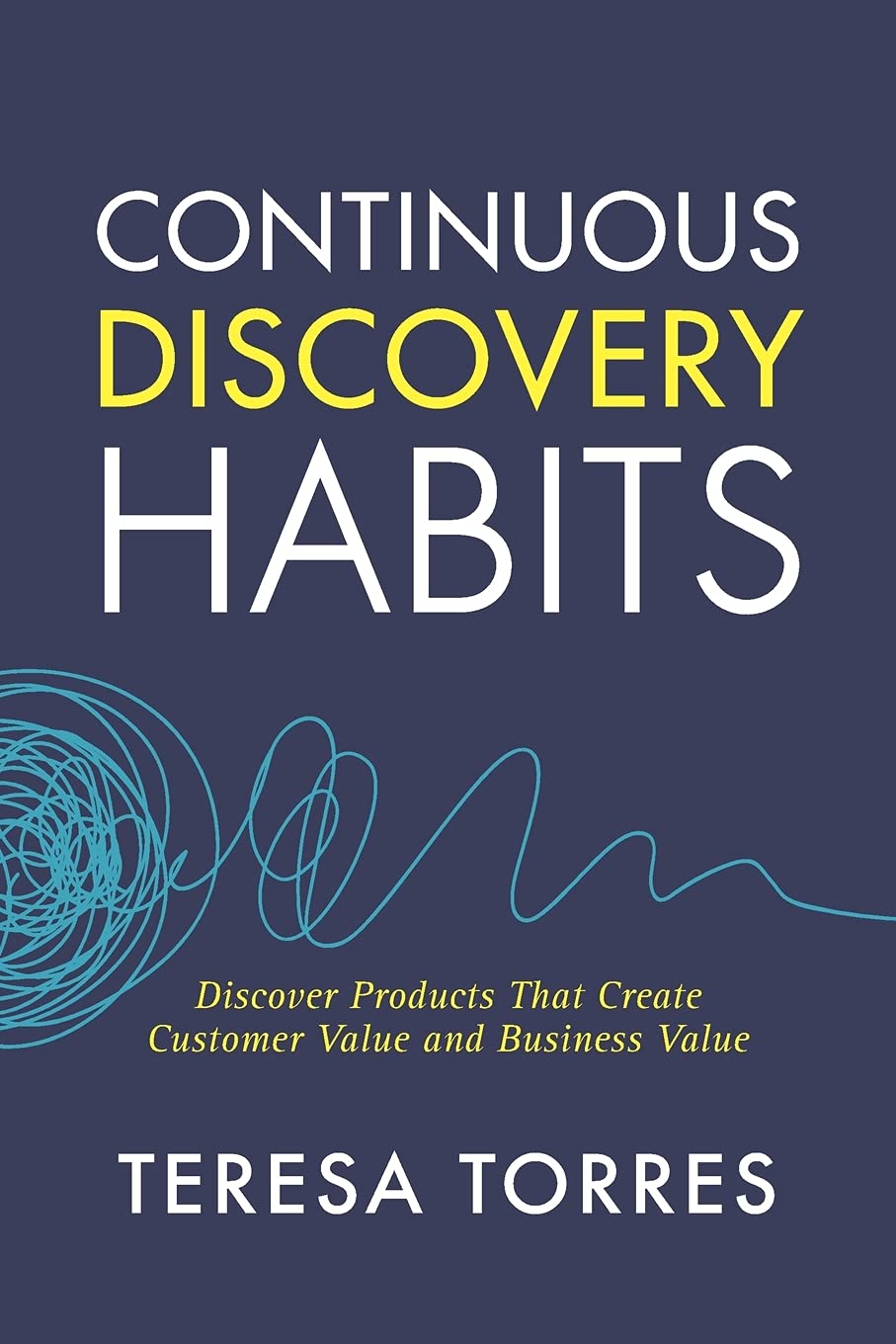
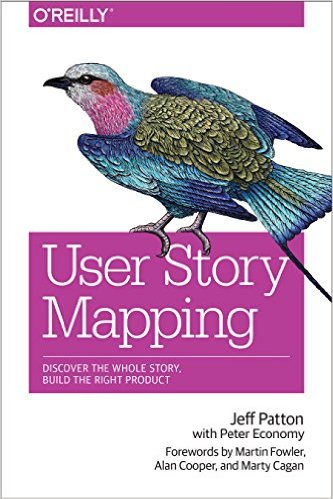
7. User Story Mapping: Discover the Right Story, Build the Right Product (Jeff Paton)
Jeff Patton's story mapping technique is part UX diagram, and part Product workshop. His method for collaboratively visualizing product backlogs helps teams have more productive conversations about requirements, priorities, and trade-offs. And his workshop videos, with his trademark sketch demos, make for an engaging lesson in visual storytelling.
- Story maps help teams move from flat backlogs to a shared understanding. They expose gaps, test assumptions, while keeping the big picture context visible.
- Backbone items are foundational, but the details and functionality within that can be prioritized to deliver incremental value because there's always more to build than time or resources to build.
- Keeping the map visible creates a shared artifact for teams to gather around and discuss.
8. The Mom Test (Rob Fitzpatrick)
Rob Fitzpatrick's The Mom Test is a short, simple book about talking to customers without lying to yourself. If you ask leading questions, people will tell you what you want to hear in an effort to be nice (just like your mom). But this leads to products and decisions based on false validation, overconfidence, and wishful thinking.
While often recommended for founders and product managers, this book is just as relevant for UXers — and it makes an excellent companion to Erika Hall's Just Enough Research.
- Ask customers about past behaviour, not opinions or hypotheticals so you can learn from what they've actually done, not what they say they'd do.
- Look for signals of real pain (see also: vitamin vs painkiller) like money spent or workarounds to find opportunities to deliver real value.
- Treat learning as a skill worth practicing. Simply put, bad questions lead to bad data, which result in costly mistakes.
 Rob Fitzpatrick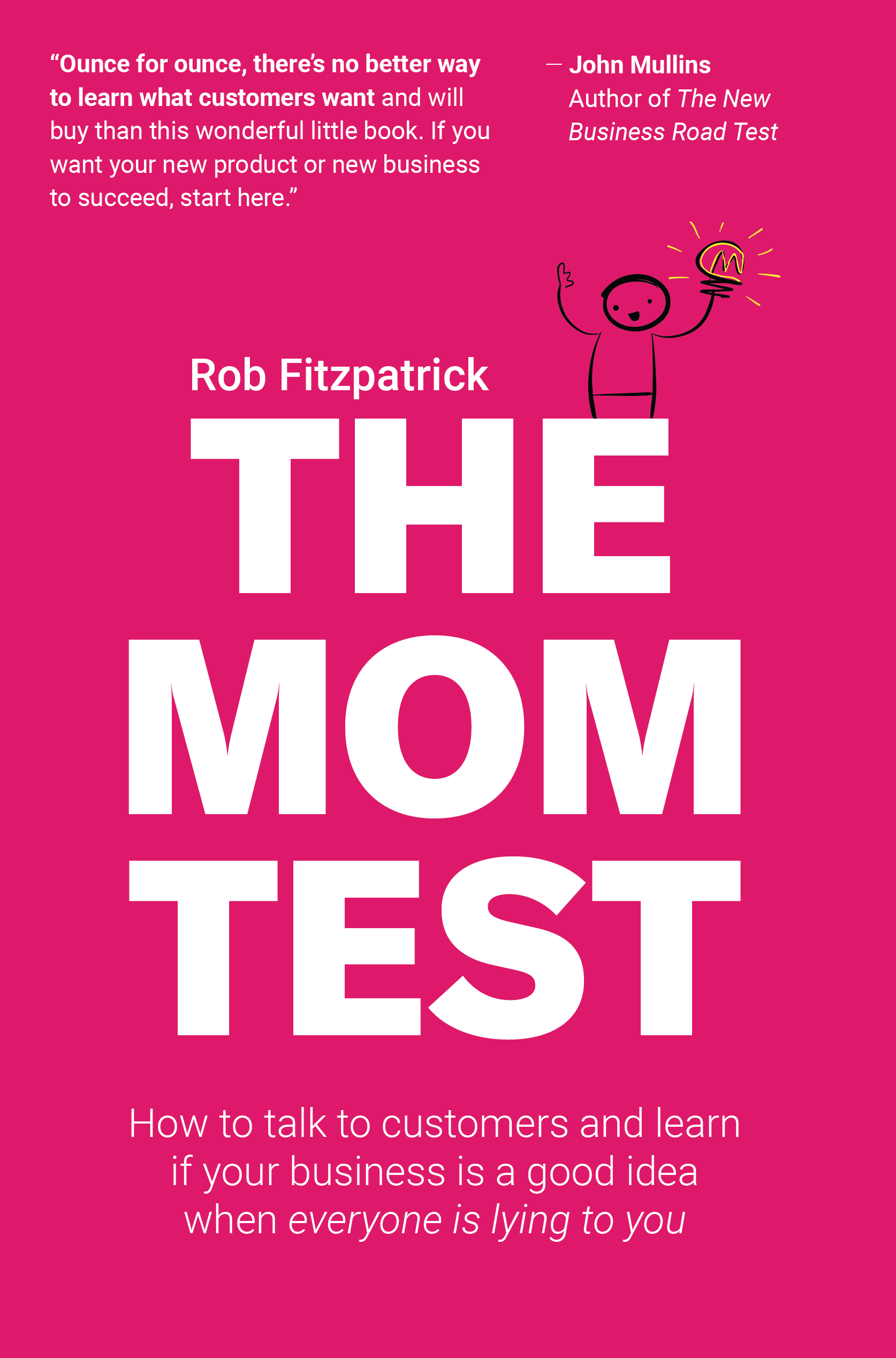
9. The Business Model Is The Grid (Erika Hall)
"Anyone who says they make decisions based on data, not stories, is a lying liar."
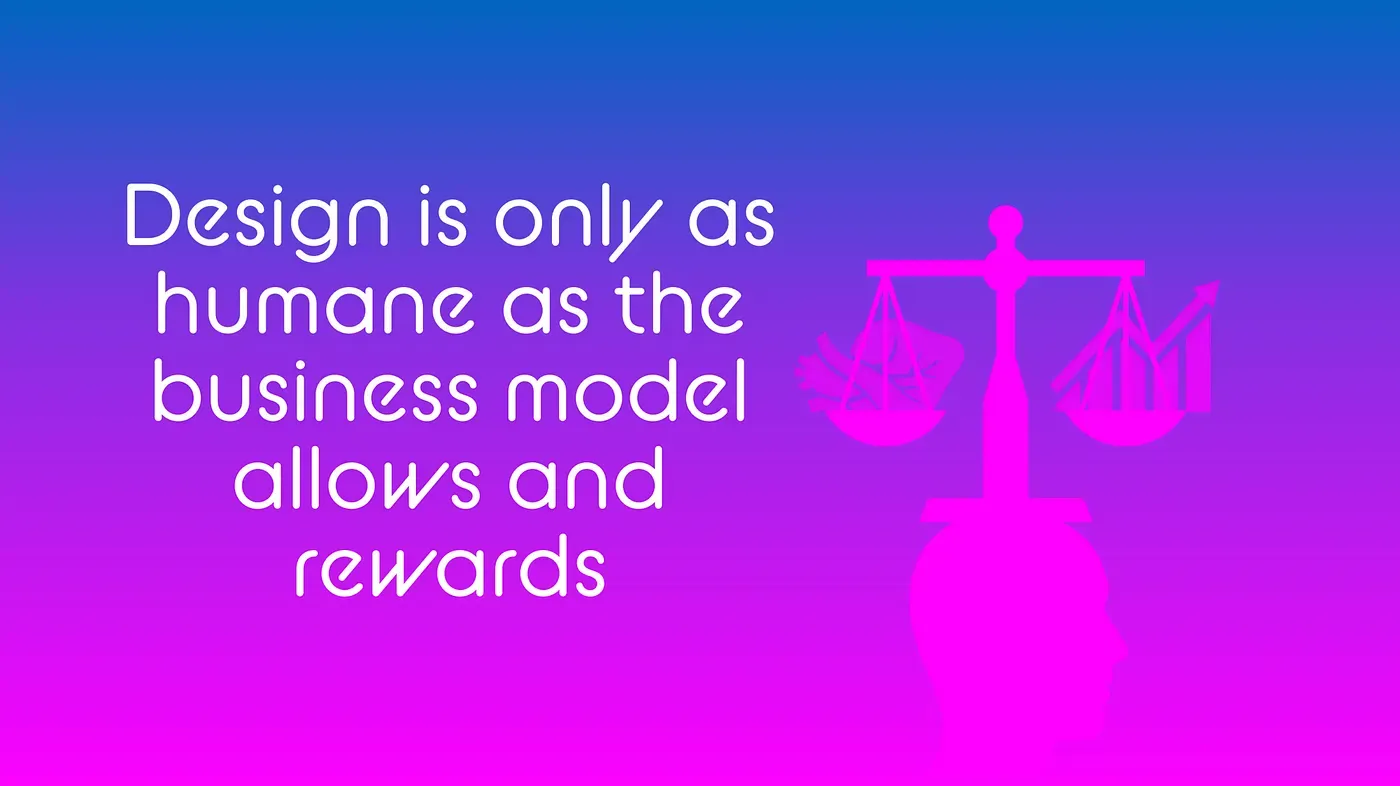
In this blistering conference talk, Erika comes to terms with a business reality few designers are taught to deal with. Using the metaphor of a design grid (the 8pt spacing guide that every element in a design system conforms to), she argues that the impact of design is constrained by the underlying business models we operate within.
And her message to designers is that business conversations aren't as complex or rational as we make them out to be — the statistics, economic models, and seeming certainty that businesses operate on are a false truth. But businesses are made up of people, so building better products starts with building relationships throughout the organization, and tell stories that change the system.
- Good for users, good for the business, and good for society are not the same thing. The myth that we can satisfy all users doesn't hold up in the real world.
- Businesses phases impact which aspects of the model carry the most weight — at creation phase, value proposition holds prominence, when sustaining innovation, organizations steer toward customer needs, and when optimizing for efficiency, value for shareholders dominates.
- If you want to build products that do good, you need to get your hands a bit dirty — you need to roll up your sleeves and engage with the business model, the organizational structures, and the power relationships that make up the organization.
 Erika Hall at Clarity ’23
10. Creating True Partnership Between Product and Design (Jesse James Garrett)
Jesse James Garrett, author of The Elements of User Experience has one word for UX and Product teams seeking to partner more effectively: Reconcile.
In this talk at Y Oslo, he explores the common frustrations that keep teams at odds and traces their path through incentive structures, culture, training, and values. He argues that reconciliation through shared goals and mutual respect is the only path forward for true product partnerships. Because at the end of the day, people working together is the only way to create something new and lasting.
- Acknowledge the gap between Product and Design
- Designers need to become more comfortable with "good enough" and understand the trade-offs Product Managers have to balance.
- Product Managers should make room for intangibles, because not everything that has value can be easily measured or justified; and "show a little spine" by saying no to the business from time-to-time.
- Both teams should turn towards the middle, and cultivate mutual understanding, which requires reciprocity at the leadership level.
Honourary Mentions:
Although these last recommendations are firmly rooted in the world of UX/Design, they are very much product-shaped, from leaders that span across the two disciplines.
Finding Our Way (Peter Merholz, Jesse James Garrett)
A podcast on design leadership with two of the field's early leaders. Peter and Jesse interview designer leader (plus a few product managers) in all manner of fields exploring the issues design is wrestling with, and offering advice on what's next.

Articulating Design Decisions: Communicate with Stakeholders, Keep Your Sanity, and Deliver the Best User Experience (Tom Greever)
Explaining design decisions can be hard. Although the examples are a bit dated, Tom Greever's book is filled with practical advice for designers on working with and communicating value to non-design stakeholders.
 Tom Greever
The Product Picnic (Pavel Samsonov)
A prolific writer and reader, Pavel writes on challenges in UX and product management, while aiming to connect today's discussion with "insights the industry forgot." His free newsletter is something I look forward to every week, and worthy of the space in your inbox.
 The Product Picnic
PS. If you found this article useful, I'll be writing more about the overlap between UX and Product. Please subscribe if you'd like to follow along.